
Vehicle Photography
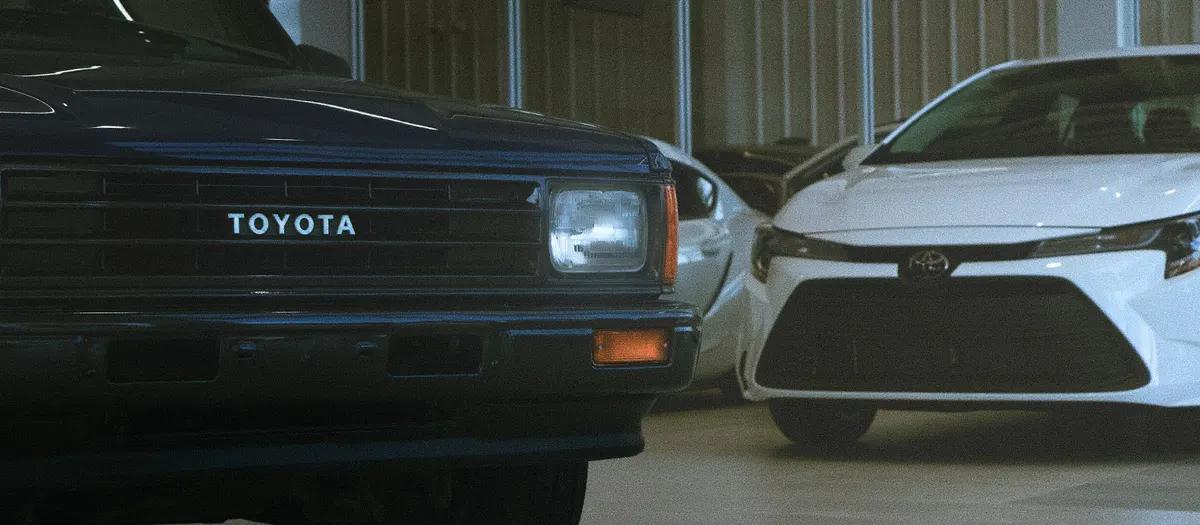
We shoot every vehicle from the same standard angles, with interior and exterior details. You get a ready set for listing sites and your own inventory pages.
Automotive
For dealerships, repair shops, tire centers and auto parts brands: digital marketing that makes the phone ring and fills the appointment book.
Get a Quote30 minutes · Free · Not a sales call
Growth Built for Automotive
Free analysis
We review your business and competitors, then get back to you within 1 business day.
Sound familiar?
When we talk to dealership and repair shop owners, we hear the same complaints again and again. The light boxes show the problem; the dark boxes show how we solve it.
All my customers come from listing sites, and I keep paying their fees.
We build a channel that brings inquiries directly through your own website, with no listing fees.
I advertise, but the people who reach out only ask the price.
We target searches with strong buying intent and keep browsers out of the campaign.
Our shop does good work, but new customers aren’t coming in.
We help you move up the map on searches by make, model and neighborhood.
We look at your business model, your area and the competition, then give you a realistic budget range and a 90-day priority list. The call is free.
Scope of work · Illustrative examples
Here is every step of the work, shown the way it will look for your business: first the site your customers land on, then how you appear on Google and Instagram, and finally how we measure which ad brings in customers.
01Step 1
Whoever clicks an ad or a search result lands on your site first. We build pages that load fast on a phone and show your services, pricing logic and contact options on the first screen.
Pre-owned cars with inspection reports
Browse cars in stock and book a test drive. Trade-in and service options.
See CarsInspection report
Test drive appointments
Trade-in valuation
02Step 2
We show up for people already searching for your service, at the moment they search. Campaigns are split by search intent, and ad copy only uses facts verified on your site.
Sponsored
Used SUVs for Sale | Inspected Cars
Browse the SUVs and sedans in stock. Book a test drive.
Cars for SaleTrade-InAppointments
Sponsored
Scheduled Maintenance and Service | Northgate Auto
Scheduled maintenance, mechanical and electrical service. Book a service appointment online.
Book ServiceDirections
Sponsored
Northgate Auto
Car dealership · Auto Mile, Route 9
Open · Closes 7 PM
03Step 3
We show your business to people nearby or interested who aren't searching yet. Vertical video, single image and carousel ads are tested together; the winners get scaled.
Time for maintenance?
Book a service appointment online.
Book Now
Every car has its report ready
Inspection reports for cars on sale.
See Cars
Is the part you need in stock?
Ask with the part number.
Ask on WhatsApp04Step 4
The work starts with measurement so no ad spend goes to a result nobody can see. Every step from search to customer is tracked, and the budget grows with real demand, not guesses.
Images and copy are illustrative examples; the brand name is made up. The real work uses your own photos, prices and details.
Request This Plan for My BusinessPackages
We don’t list prices, because in this industry the budget depends on your business model, the size of your inventory and how competitive your area is. We decide together on the call which package fits you.
For auto repair shops, tire centers and maintenance shops
For dealerships and lots that sell vehicles
For brands selling auto parts and accessories
Photo · Content · Social Media
Car buyers look through dozens of photos and videos of a vehicle before they ever visit the dealership. Showing your inventory professionally directly raises the conversion of your listings and ads.
We shoot every vehicle from the same standard angles, with interior and exterior details. You get a ready set for listing sites and your own inventory pages.
We make short videos that circle the vehicle and show the interior and features. They bring in test-drive requests, especially in Meta ads.
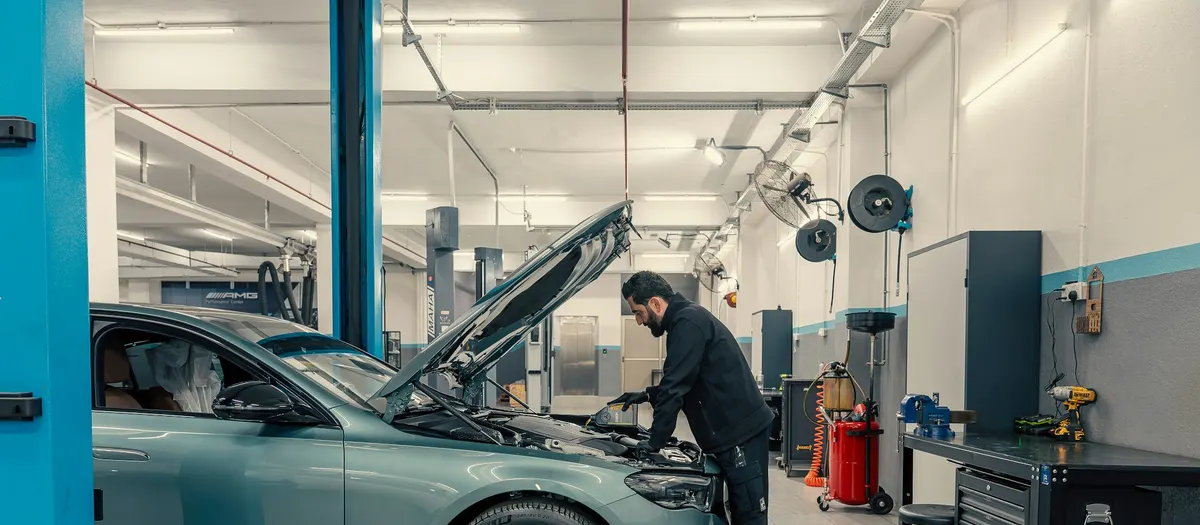
Content that shows your service area, equipment and technicians sends a trust signal, and it’s used in service appointment campaigns.
We put new arrivals, price updates and delivery posts on a calendar, and route inquiries that come in by DM to your sales consultants.
Industry know-how
Nobody buys a car or a part when they don’t need one. People search by typing a make, a model, a problem or a part name. So the real job isn’t creating demand but being in front of demand that already exists, at the right moment. That’s why search and maps come first.
In automotive, a sale is usually closed on a phone call or in person. The website’s job isn’t to sell but to start the call or the appointment. In a setup that doesn’t measure calls, you can’t see which campaign really brings in business, and the budget is spent blind.
With used cars and with repairs, the customer’s first question isn’t the price but whether they’ll be taken advantage of. An inspection report, warranty terms, real photos and honest reviews answer that worry. A business that makes these visible wins more work than a competitor at the same price.
For repairs, tires and maintenance, customers usually choose a business near them. That makes map visibility the highest-return work in these segments; it’s free and shows up on searches with direct buying intent. Buyers will travel farther for a dealership, so the strategy there is different.
Process
A 30-minute phone call about your business model, your inventory and your current channels. It isn’t a sales call; it’s a conversation about what needs to be done.
We review your ad account, your website, your map visibility and where competitors in your area stand. You see where the budget is being wasted.
You get the priority channel, a monthly budget range, the website fixes and the tracking setup in writing. It’s clear what happens in which month.
Campaigns go live, pages are reworked and call and form tracking is connected. Every month you get one report with the work done, the results and next month’s plan.
What do we do?
We don’t launch everything at once. We set priorities based on your business model, your area and your goals, and start the budget on the channel that pays back fastest.
The first channel for repair shops and dealers.
Showing up on searches with buying intent.
Getting your vehicles seen in search.
Growing parts sales.
Making trust visible.
Making sure no inquiry goes to waste.
Free analysis
Fill out the form and we'll review your site, your competitors and the search demand in your industry, then call you within 1 business day. The call takes 30 minutes, it's free, and it isn't a sales call.
This isn't a sales call. We won't say “yes” to work that isn't a good fit for you; we'll tell you so plainly on the call.
S.S.S.
Automotive Knowledge Center
The six questions dealerships, repair shops and auto parts businesses ask us most, answered from hands-on experience. Each heading matches a question people actually search for.
Dealerships
Many car buyers start their search on listing sites. For dealerships that means ready-made demand, but it also means paying fees and appearing side by side with competitors in the same list. The problem with depending on them isn’t visibility; it’s that price becomes the only point of comparison.
The channel to build against that is your own website. Every vehicle should have its own page with the make, model, year, mileage, trim, inspection status and real photos. Once you create category pages by make and model, the site starts showing up on searches like “[model] for sale”.
Marking up vehicle pages with structured data lets search results show price and condition. Pages for sold vehicles shouldn’t be deleted; mark them as sold and point visitors to similar vehicles, so the ranking you’ve earned isn’t lost and the visitor stays with you.
Search ads are added on top of this structure. Showing up on model-specific searches with strong buying intent is different from being one more entry in a listing site’s results: the shopper comes straight to your page, not to a comparison list. As this channel grows, the share of sales from listing sites falls and the fees you pay matter less.
Local SEO
In repairs, tires and maintenance, the customer’s first move is to search on their phone for a business nearby. Searches like “auto repair near me”, “tires [neighborhood]” or “[make] dealer service” carry the intent to get work done that same day. A shop that doesn’t show up in the map results loses this customer without ever knowing it.
The main ranking factors are a complete business profile, the right category, a filled-in list of services, regular and genuine reviews, and the distance to the person searching. Opening hours, shop photos, service descriptions and contact details should be kept up to date.
Reviews are at the center of the decision here, because customers worry about being taken advantage of. Building a routine of asking for a review when the car is handed back clearly increases the number of reviews. A reply to a negative review that isn’t defensive and offers a solution often leaves a positive impression on other customers who read it.
Separate service and neighborhood pages on your website support map visibility. When you explain which makes you work on, which jobs you do, roughly how long they take and the quality of the parts you use, you gain more surface in search and customers are convinced before they call. Online appointment booking also wins over people who’d rather not call.

Google Ads
The most common reason automotive ad budgets go to waste is that the campaign shows up on research searches. Searches like “car prices” or “best cars” come from people looking for information; they click, look and leave. Those clicks use up the budget but don’t make the phone ring.
The split is made in the keyword and match type structure. Searches that combine a model name with action words like “for sale”, “price”, “service” or “replacement” show buying intent. Searches with comparisons, reviews and ratings, on the other hand, should be excluded. Once this is fixed, the number of clicks drops and the quality of inquiries goes up.
Location and timing settings are the second factor. For repairs and tires, showing ads outside the area you serve makes no sense. In the same way, running call-focused ads at hours when nobody answers the phone means paying for missed calls. In most accounts these settings haven’t been set up at all.
Finally, tracking has to be in place. Phone calls should be tracked as conversions as well as form submissions, because in this industry most conversions happen by phone. If you can’t see which campaign and which search started the call, the budget drifts toward the campaign with the most clicks instead of the one that brings results.
Ecommerce
In auto parts, one big question stops the purchase: does this part fit my vehicle? If shoppers can’t be sure, they don’t order, because returning the wrong part is a hassle. That’s why fitment information comes before every other element of your ecommerce setup.
The answer is a fitment filter based on make, model, year and engine. Showing the list of compatible vehicles on the product page, matching OEM part numbers and showing equivalent parts removes the hesitation. Letting shoppers select their vehicle once and then see only the products that fit it across the whole site clearly raises conversion.
Your category structure decides your search visibility. Each way people search, by part name, by vehicle model and by OEM number, needs its own page surface. Shoppers search in any of these three ways; a structure built only on part names misses every model-based search.
The last step is stock, shipping and returns. A part is often an urgent need, and shoppers want to know when it will arrive. Accurate stock levels, delivery times shown on the product page and clearly written return terms increase both sales and repeat orders. A promise of easy returns if the part doesn’t fit removes the biggest obstacle to the first order.
Trust
With a used car, the buyer’s first worry isn’t the price but running into a hidden defect. Accident history, accurate mileage and past maintenance records are at the center of that worry. A dealership that doesn’t share this information openly falls to second place, however good its price.
The first thing that builds trust is transparency. Putting the inspection report on the vehicle page, clearly listing replaced and repainted panels and backing the mileage with documents answer the buyer’s biggest concern. Writing a defect down openly instead of hiding it often speeds up the sale.
The second is visuals. Stock photos or a few shots from a single angle aren’t enough. Real photos of the exterior, interior, engine and trunk, and if possible a short walkaround video, convince buyers before they see the car in person and cut down on wasted visits.
The third is warranty and after-sale support. Clearly stating the warranty coverage you offer, your return or exchange terms and your after-sale support shifts the risk from the buyer to the seller, which makes the decision easier. Add genuine customer reviews on top, and the dealership is chosen for its reliability, not just its price.
Tracking
In automotive, most sales start with a phone call. The shopper sees the vehicle or the part, calls to ask a question, and the deal moves forward in conversation. Yet many businesses only measure form submissions, which hides the real return on their campaigns.
A correct setup starts with connecting tracking to the call buttons on your website and to the call actions on your Google Business Profile. That makes it visible which campaign, which page and which search made the phone ring. Without this data, the budget drifts toward the campaign with the most clicks instead of the one with the most results.
Tracking shouldn’t stop at the count. You should also assess how many incoming calls are real inquiries and how many are wrong numbers or unrelated questions. Once you make that split, you can see which keywords bring qualified calls and which bring noise, and narrow the campaign accordingly.
The last link is response time. A call that goes unanswered or gets a late callback is ad budget lost outright. Tracking how many calls get answered, adding staff at busy hours and collecting callback requests after hours is, in most businesses, the fastest gain you can get without spending more.
↕ Scroll up / down to read every section.
Vehicle sales, service appointments or parts orders: which should come first? We’ll be clear about it on the call.
Book a free intro call30 minutes · Free · Not a sales call
Work in a different industry? Visit our industries page for more.