
Truck and Crew Photos
Trucks, hoisting equipment and crew portraits give your website and your Google profile a professional look.
Moving & Storage
For local, long-distance and storage moving companies: digital marketing that brings quote requests without cutting your prices.
Get a Quote30 minutes · Free · Not a sales call
Growth Built for Moving Companies
Free analysis
We review your business and competitors, then get back to you within 1 business day.
Sound familiar?
When we talk to moving companies, we hear the same complaints again and again. The light boxes show the problem; the dark boxes show how we solve it.
Customers get quotes from several companies and pick the cheapest.
We put differences people can compare next to the price, such as damage coverage, crew and what’s included.
Many of the jobs we quote never get back to us.
We rebuild your quote flow around fast replies and follow-up messages.
The fees we pay lead sites eat up our profit.
We build your own channel that brings requests directly to you, with no per-lead fees.
We talk about which areas your requests come from, how many quotes turn into jobs and where starting would bring the fastest results. The call is free.
Scope of work · Illustrative examples
Here is every step of the work, shown the way it will look for your business: first the site your customers land on, then how you appear on Google and Instagram, and finally how we measure which ad brings in customers.
01Step 1
Whoever clicks an ad or a search result lands on your site first. We build pages that load fast on a phone and show your services, pricing logic and contact options on the first screen.

Leave moving day to us
Packing, lift-assisted moving and setup. Pick your home size and book a free estimate.
Get a QuoteFree estimate
Insured moves
Lift-assisted moving
02Step 2
We show up for people already searching for your service, at the moment they search. Campaigns are split by search intent, and ad copy only uses facts verified on your site.
Sponsored
Local Movers | Free Estimate
Packing, lift-assisted moving and assembly. Pick your home size and book an estimate.
Local MovesLong DistanceGet a Quote
Sponsored
Furniture and Belongings Storage | Steady Hands Moving
Short- and long-term storage. Tell us the volume and we will set aside the right space.
StorageContact
Sponsored
Steady Hands Moving
Moving company · Main St, Downtown
Open · Closes 8 PM
03Step 3
We show your business to people nearby or interested who aren't searching yet. Vertical video, single image and carousel ads are tested together; the winners get scaled.

We wrap the dishes
A professional packing crew.
Get a Quote
Belongings do not tire on the stairs
Lift moves for upper floors.
Request an Estimate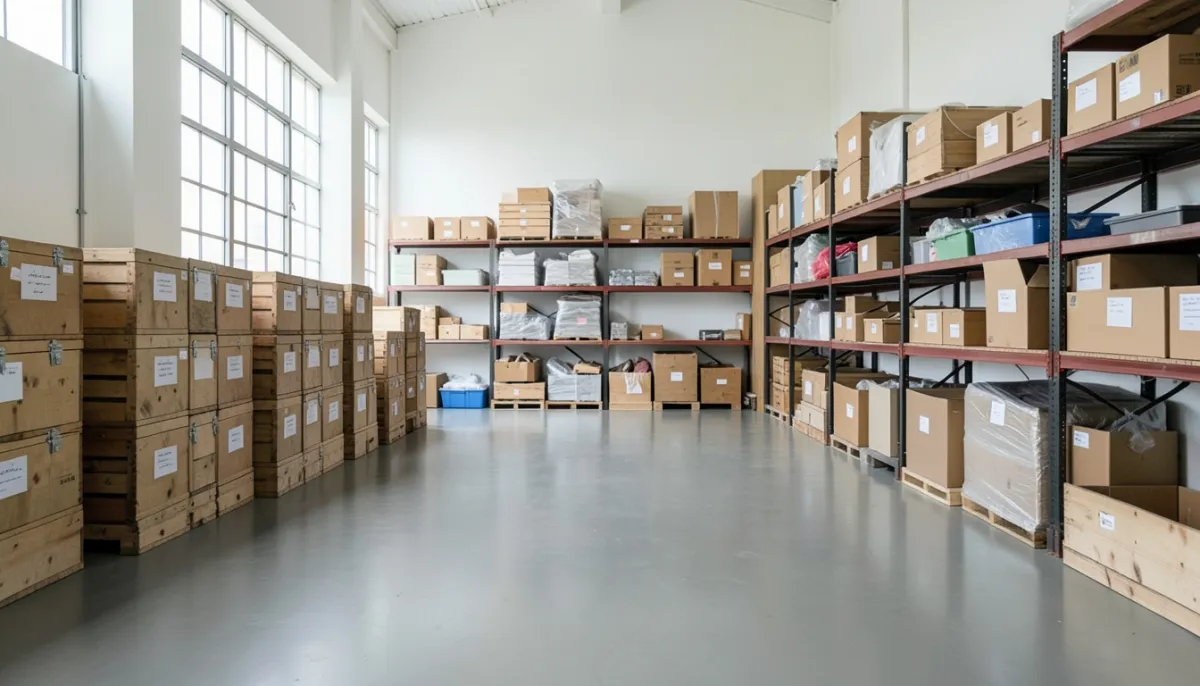
Your belongings stay with us during renovation
Short- and long-term storage.
Message on WhatsApp04Step 4
The work starts with measurement so no ad spend goes to a result nobody can see. Every step from search to customer is tracked, and the budget grows with real demand, not guesses.
Images and copy are illustrative examples; the brand name is made up. The real work uses your own photos, prices and details.
Request This Plan for My BusinessPackages
We don’t list prices, because in this industry the budget depends on the areas you serve, your truck and crew capacity and the season. We decide together on the call which package fits you.
For companies doing residential moves within the city
For moving companies that work by route
For companies offering office moves and storage
Photo · Content · Social Media
Moving customers want to see the company they’ll trust with their belongings. Content that shows your crew, your trucks and the care you take with packing helps bring in more quote requests.
Trucks, hoisting equipment and crew portraits give your website and your Google profile a professional look.
Shots that show how belongings are packed are the best answer to the worry “will my things get damaged?”
Time-lapse videos of a move from start to finish, filmed with customers’ permission, show your process in Reels and ads, and build trust in it.
A content calendar for finished moves, seasonal campaigns and customer reviews; estimate requests that come in by message go straight to your team.
Industry know-how
People who are moving usually ask several companies for a quote at the same time. Research aside, the reality in the field is simple: the company that replies first and speaks clearly often wins the job. That’s why the speed of your quote flow can matter more than your ad budget.
In moving searches, people compare prices easily. A company that competes only on price erodes its profit while its truck and crew costs stay fixed. Stating clearly your damage coverage, packing materials, stairs and elevator handling, and disassembly and reassembly takes the comparison away from price alone.
People don’t search for “movers”; they search for things like “movers from [city] to [city]”. Setting up separate pages and separate campaigns for the routes you run often brings far cheaper and far more qualified demand than a general moving ad.
Moving demand peaks in the summer months and between school years, and drops sharply in winter. Some work makes up for that drop: storage, office moves, commercial agreements and small moves. These run with their own campaigns in the off-season.
Process
A 30-minute phone call about the areas you serve, the routes you run often, and your truck and crew capacity. It isn’t a sales call; it’s a conversation about what needs to be done.
We work out which searches people make in your area and on your routes, where your competitors show up and what lead sites are costing you.
You get the priority routes, the pages to create, a seasonal budget plan and the design of your quote flow in writing. It’s clear what happens in which month.
Your profile is set up, pages go live, campaigns are built, and the quote form and call tracking are connected. Every month you get one report with how many quote requests came in, how many turned into jobs and next month’s plan.
What do we do?
We don’t launch everything at once. We set priorities based on your area, your routes and your capacity, and start the budget on the channel that pays back fastest.
Being among the first to show up in your area.
Showing up in city-to-city searches.
Reaching people who’ve decided to move.
Handling requests without losing them.
Building the trust people need to hand over their belongings.
Work that fills the off-season.
Free analysis
Fill out the form and we'll review your site, your competitors and the search demand in your industry, then call you within 1 business day. The call takes 30 minutes, it's free, and it isn't a sales call.
This isn't a sales call. We won't say “yes” to work that isn't a good fit for you; we'll tell you so plainly on the call.
S.S.S.
Moving & Storage Knowledge Center
The six questions moving companies ask us most, answered from hands-on experience. Each heading matches a question people actually search for.
Demand
People who are moving usually act in two stages. First they search for something like “movers [town]” or “movers from [city] to [city]” and look at the first few companies that come up. Then they ask several of these companies for a quote on the same day. The decision is often made on the day the quotes come back.
This behavior decides two things. First, a company that doesn’t show up on the first page and in the map box never even enters the race. Second, a company that shows up but replies late is effectively out too. In this industry, visibility and speed of response can’t be separated.
Many searches are made on mobile, and people often prefer to call or send a text rather than fill out a form. That’s why the most visible thing on the site should be a tappable phone number and a texting link, not a long form. If you use a form, keep it short, and leave details like an inventory list for the next step.
Finally, people look for an idea of the price range. Pages with no price information at all keep that uncertainty alive in people’s minds and lower the rate of quote requests. Even if you can’t give an exact price, explaining what it depends on (distance, floor, elevator access, the amount of belongings, packing) both builds trust and brings qualified requests.
Routes
A good share of moving searches include the names of two cities or two towns. People aren’t looking for a moving company in general but for one that works on their route. A single “services” page doesn’t directly answer any of these searches.
A route page is valuable when it carries real information specific to that route: the distance and typical moving time, which days you run trips, whether you take small moves, local conditions that affect the price and the questions people often ask about that route. When this information is written out, the page both helps people and shows up in searches.
The most common mistake is duplicating the same text across dozens of pages with a different city name. These pages add nothing for people, don’t create value in search engines and can even lower the overall quality of the site. The sound approach is to stick to the routes you actually run and have something to say about.
Route pages help on the ad side too. When each route has its own campaign, bids and budget can be set by that route’s profitability. Bidding higher on routes where you can find a return load and staying cautious on one-way routes is what turns your ad budget into profit.
Quotes
In moving, the output of marketing isn’t a sale but a quote request. The real loss is often not in the ads but in the step between the quote and the job. Every hour that passes after a request comes in makes it more likely the customer will sign with another company.
The first rule is speed. If possible, reply to every request within an hour. That can be hard while the crew is out on a job; in that case, an automatic message confirming the request, followed by a short call, keeps the customer without making them wait. Unanswered requests should always be checked at the end of the day.
The second rule is clarity: a quote shouldn’t be just a number. When you write out what’s included (packing, stairs and elevator handling, disassembly and reassembly, damage coverage), how big a crew you’ll bring and how long the move will take, customers compare on scope rather than price. That’s the most solid way to win jobs at a higher price.
The third rule is follow-up. Many customers who get a quote never get back to you, but that doesn’t always mean “no”; often the decision has just been put off. A single short reminder sent a few days later increases the number of jobs you close at no extra cost. Even a simple list is enough to keep this follow-up regular.
Trust
Moving is stressful for most people, and the biggest worry is damage to their belongings. That’s why the decision rests not just on price but on whether the company looks trustworthy. A company that looks professional, communicates clearly and explains what it will do up front usually comes out ahead at the same price.
Damage coverage is at the center of that trust. The scope of the coverage, when it applies and how the process works if something is damaged should be written out clearly. Using the phrase “fully insured” without giving the details has the opposite effect on informed customers.
The second element is visibility: real photos of your trucks, your crew and your packing materials. Experienced customers notice a moving site that uses stock photos right away. Photos from your own jobs, especially of packing and hoisting, directly raise the perception of quality.
The third element is reviews. Moving reviews are often very emotional: a damaged item leads to a bad review, and a careful crew leads to a glowing one. Asking for a review after every move and replying to negative reviews with a solution rather than defensively is, in the long run, one of the most valuable marketing investments.
Season
Moving demand swings noticeably through the year. The summer months, the time between school years and the end of lease terms create busy periods, while demand drops sharply in winter. Planning your budget and crew the same way all year makes that swing hurt even more.
In peak season, the priority is filling capacity with the most profitable jobs. Ad costs rise in this period too, so instead of spreading the budget across broad keywords, focus on high-intent searches and profitable routes. When the calendar is full, scaling back the campaign is better than sending quotes you can’t fulfill.
In the off-season, the other parts of the business model come to the fore. Storage is a natural service for customers who postpone their moving date, and it brings regular income. Office and commercial moves also aren’t usually tied to the summer season; businesses move throughout the year.
The third way is partnerships. Real estate agents, property managers, furniture stores and corporate HR teams generate a steady stream of moving requests. These relationships are built through direct contact, not ads, and once they’re in place they become the most stable source of work to carry you through the off-season.
Measurement
Many moving companies answer the question “are the ads working?” by gut feeling. But in this industry, the chain you need to measure is clear: how many people saw the page, how many called or asked for a quote, how many quotes went out, how many became jobs and what the average job size was.
The first link in this chain is call and form tracking. Without measuring how many requests each campaign, route and area brings, the budget can’t be allocated correctly. Not measuring requests that come in by phone is one of the most common and most expensive gaps in this industry.
The second link is your quote-to-job rate. Once you know what share of your quotes turn into jobs, you can work out the real value of a request. With that number in hand, whether your ad cost is high or low stops being a debate; you can see it in the numbers.
The third link is job size. Moving a small studio apartment and moving a fully furnished house aren’t the same job. Once you separate out which channel brings the big jobs, the budget shifts not just to the channel that brings cheap requests but to the one that brings profitable jobs. That’s the real benefit of measurement.
↕ Scroll up / down to read every section.
Map visibility, route pages or your quote flow: which should come first? We’ll be clear about it on the call.
Book a free intro call30 minutes · Free · Not a sales call
Work in a different industry? Visit our industries page for more.