
Factory and Production Line Shoots
We professionally shoot your production line, your machinery and your quality control processes. The footage is used in your company presentation, on your website and in trade show presentations.
Manufacturing
For industrial suppliers, machinery manufacturers and exporters: digital marketing that finds the right buyer and gets you to the quoting table.
Get a Quote30 minutes · Free · Not a sales call
Brands we've worked with



Digital Growth Built for Manufacturers
Free analysis
We review your business and competitors, then get back to you within 1 business day.
Sound familiar?
When we talk to manufacturers and exporters, we hear the same complaints again and again. The light boxes show the problem; the dark boxes show how we solve it.
All our business comes from trade shows and people we already know.
We build a second source of demand that works all year round, outside trade shows.
We don’t know how to reach buyers abroad.
We choose the target countries and build search and ad campaigns in their languages.
The requests we get don’t match what we actually make.
We put your technical capabilities up front and filter out unsuitable requests from the start.
We look at your production capacity, your target markets and your current channels, then give you a realistic budget range and a 90-day priority list. The call is free.
Scope of work · Illustrative examples
Here is every step of the work, shown the way it will look for your business: first the site your customers land on, then how you appear on Google and Instagram, and finally how we measure which ad brings in customers.
01Step 1
Whoever clicks an ad or a search result lands on your site first. We build pages that load fast on a phone and show your services, pricing logic and contact options on the first screen.
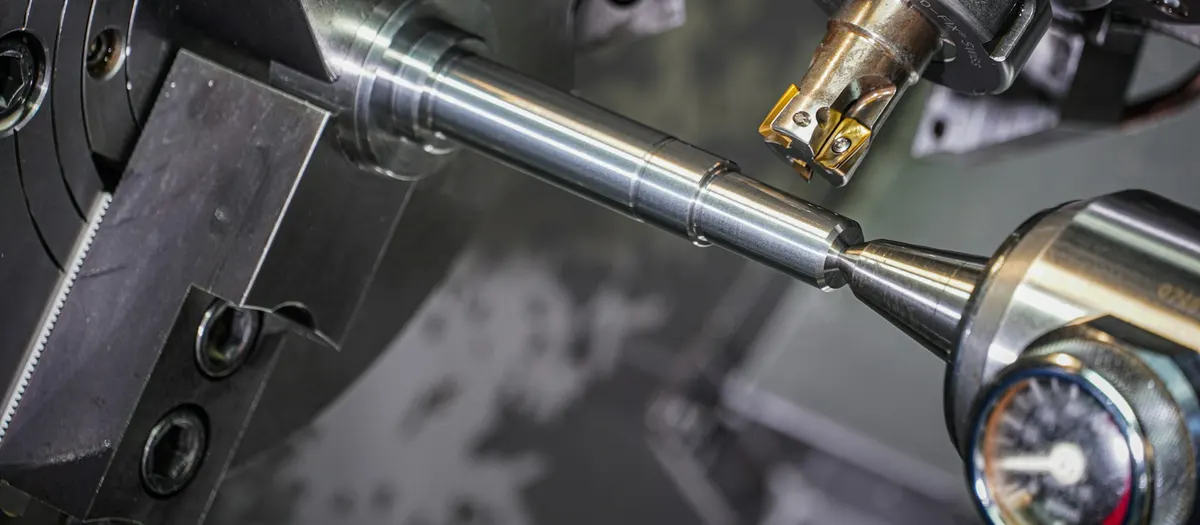
Precision machining to your specification
CNC machining and serial production. Send your technical drawing and we will return a quote.
Request a QuoteQuotes from technical drawings
Serial and prototype production
Export experience
02Step 2
We show up for people already searching for your service, at the moment they search. Campaigns are split by search intent, and ad copy only uses facts verified on your site.
Sponsored
CNC Machining | Contract Manufacturing Quote
Upload your technical drawing and we will send a quote based on material, quantity and lead time.
ProductsProductionRequest a Quote
Sponsored
Machine Spare Parts Production | Ridgeline Machining
Spare parts made from a sample or a drawing. Delivered with a quality control report.
Request a QuoteContact
Sponsored
Ridgeline Machining
Machine manufacturer · Industrial Park
Open · Closes 6 PM
03Step 3
We show your business to people nearby or interested who aren't searching yet. Vertical video, single image and carousel ads are tested together; the winners get scaled.
From your drawing to the part
From prototype to serial production.
Request a Quote
Regular shipments overseas
Export documents and logistics.
Learn More
Meet us at our booth
Book a meeting at the trade show.
Book a Meeting04Step 4
The work starts with measurement so no ad spend goes to a result nobody can see. Every step from search to customer is tracked, and the budget grows with real demand, not guesses.
Images and copy are illustrative examples; the brand name is made up. The real work uses your own photos, prices and details.
Request This Plan for My BusinessPackages
We don’t list prices, because in this industry the budget depends on the target market, the product group and the competition. We decide together on the call which package fits you.
For companies that want to strengthen their position as a supplier in their home market
For manufacturers that want to reach buyers abroad
For industrial groups with many products and many markets
Photo · Content · Social Media
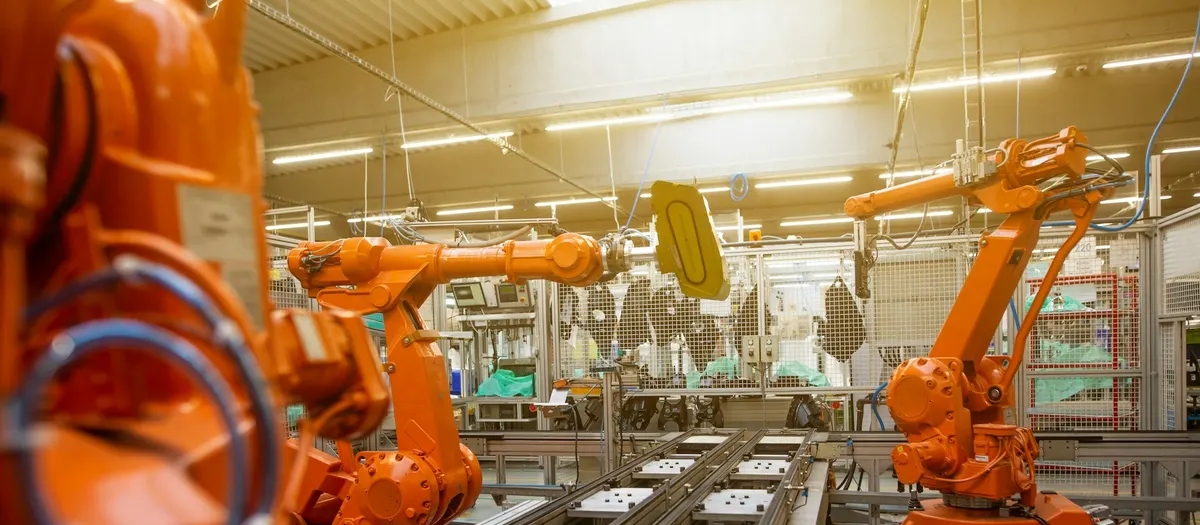
Before choosing a supplier, a B2B buyer wants to see production capacity and quality. Professional content that shows your facility and your products opens the door to quote requests from abroad.
We professionally shoot your production line, your machinery and your quality control processes. The footage is used in your company presentation, on your website and in trade show presentations.
Photos that show your products with their dimensions, materials and usage details, prepared for your catalog and your B2B platform profiles.
A video that tells your company’s story in a few minutes, subtitled for buyers abroad. It becomes your first point of contact in ads abroad and in sales meetings.
A LinkedIn-focused content calendar for trade shows, new products and production capacity posts, keeping you in regular contact with purchasing managers and distributors.
Industry know-how
In industry, the buying decision is often made by the purchasing manager, the technical lead and senior management together. Each looks at something different: one at price, one at technical fit, one at reliability. If your site and content don’t answer all three questions, the process stalls.
In this industry, buyers don’t add products to a cart; they ask for technical information and request a quote. So a conversion isn’t a sale but a qualified quote request. Product pages that carry technical data, capacity and certification details shorten the path to the quote form.
Buyers abroad search for your product in their own language. An English-only page doesn’t match the search language a buyer in Germany or Poland uses. A content structure built in the target country’s language is a precondition for being visible in that market.
In industry, months can pass between the first contact and the order. That’s why judging a campaign by its first month of sales is misleading. The right approach is to measure the chain from quote request to order and compare channels by what that chain produces.
Process
A 30-minute call about your production capacity, your product groups, your target markets and your current channels. It isn’t a sales call; it’s a conversation about what needs to be done.
We review search volume in your target countries, where competitors stand, your current site and your ad account. It becomes clear which markets have real demand and where you aren’t visible.
You get the priority market, the language structure, a monthly budget range, the site changes and a content plan in writing. It’s clear what happens in which month.
Campaigns go live, pages and translations are produced and quote request tracking is connected. Every month you get one report with the work done, the results and next month’s plan.
What do we do?
We don’t launch everything at once. We set priorities based on your product groups, your target market and your capacity, and start the budget on the channel that pays back fastest.
Being found in the target market, in its own language.
Pages that convince a technical buyer.
Catching buyers who are searching.
Reaching the decision-maker.
Making the trade show last all year.
Seeing which channel brings orders.
Free analysis
Fill out the form and we'll review your site, your competitors and the search demand in your industry, then call you within 1 business day. The call takes 30 minutes, it's free, and it isn't a sales call.
This isn't a sales call. We won't say “yes” to work that isn't a good fit for you; we'll tell you so plainly on the call.
S.S.S.
Manufacturing & B2B Knowledge Center
The six questions manufacturers and exporters ask us most, answered from hands-on experience. Each heading matches a question people actually search for.
Export
For many companies, the search for buyers abroad is limited to trade shows and B2B marketplaces. Both work, but both share a problem: trade shows happen a few times a year, and platforms charge fees and list you alongside your competitors. A direct channel that works all year round can only be built with your own digital setup.
The first step is choosing markets. Instead of opening up to every country at once, you pick two or three countries with real demand for your product. That choice is made with data, not guesswork: search volume in the target countries, the presence of competitors and your existing export data are weighed together.
The second step is language. Buyers search for products in their own language; an English-only page doesn’t match a large share of the searches made in Germany or Poland. You need a structure in the languages of the chosen countries, using technical terms the way that market actually uses them. Languages multiplied with machine translation won’t do this job.
The third step is the channel mix. Search catches demand that already exists; business ad channels reach companies that aren’t searching for you yet but should be. Meta and similar channels can be used for this second group. The right mix depends on your product group.
Site Structure
The most common industrial website looks like a digital catalog: product photos, short descriptions and a contact form. That may be enough for someone who already knows you, but it doesn’t answer the questions of a buyer finding you for the first time, and it gives search engines little to work with.
A buyer’s first question isn’t what the product is, but whether it meets their need. That’s why you need application and industry pages alongside your product pages. Pages that explain which industries it serves, for what use and under what conditions both convince the buyer and carry search volume.
In this industry, technical information is the marketing. Capacity, tolerances, materials, standards and certifications, minimum order quantity and lead time should all be on the page. Hiding this information doesn’t force a meeting; more often it sends the buyer to another supplier.
The last layer is trust. Real photos of your production facility, capacity details, the industries you work with, quality certificates and your company information lower the buyer’s sense of risk. For buyers abroad in particular, seeing that the supplier really manufactures is the first screening criterion.

Request Quality
In industry, getting more requests is easy; getting useful ones is hard. Requests that don’t fit your production capacity, ask for very small quantities or want a completely different product eat up your sales team’s time and never turn into orders. That’s why the measure isn’t the number of requests, but the number of requests worth a meeting.
The first filter is on the product page. When details like minimum order quantity, production capacity, materials and tolerance ranges are written clearly, unsuitable buyers don’t fill in the form in the first place. Hiding this information brings more requests but lowers their quality.
The second filter is the form. One or two distinguishing questions such as quantity, intended use, target delivery date and country let your sales team prioritize a request before even reading it. The form doesn’t need to be long; the right two questions do more than a ten-field form.
The third filter is the campaign setup. When ads are optimized for the number of requests, the system finds whoever fills in forms most easily; when they’re optimized for qualified requests, it starts looking for people who resemble real buyers. For that, your sales team’s verdict on each request needs to be fed back into the measurement system.
Search
Search volume for industrial products is low compared with consumer products, but the person searching almost always has a real need. That’s why a search made by a hundred people here can be worth more than ten thousand searches in other industries. Writing off this work because of low volume is a common mistake in this industry.
Keywords fall into three groups: product names, applications and uses, and the technical problems you solve. Many companies build pages only for the first group, yet many buyers don’t know the product’s name; they search for the problem they want to solve. Opening pages for this group fills a space competitors often leave empty.
Terminology changes by market. The same product has different names in different countries, and even within an industry it can go by several terms. That’s why keyword research should be done by studying how the target market actually talks, not by dictionary translation; otherwise you build pages around words that are technically correct but that nobody searches for.
The technical side shouldn’t be neglected either. Industrial sites are often weighed down by heavy images, have weak mobile layouts and produce product pages that are copies of each other. Pages with distinct content that carries real information, plus speed and a working mobile layout, are preconditions for visibility.

Buying Process
In industry, months can pass between the first contact and the order. The buyer reviews the product, gets quotes, runs a technical evaluation, waits for budget and only then decides. A company that goes quiet during this time hands the demand it created to a competitor, because when the moment of decision comes, the supplier that stayed top of mind gets chosen.
The first way to stay in touch through the process is remarketing. Ads shown to people who visited your site, looked at a product page or left the quote form half-finished cost far less than reaching a new audience, and they keep you remembered at the moment of decision.
The second is content. Technical comparisons, user guides, application examples and frequently asked technical questions are what buyers look for during evaluation. A supplier that provides this content earns trust before making a sale and becomes a point of reference for the technical lead.
The third is working together with the sales team. What demand marketing produces, how the sales team evaluates it and which requests turn into orders should be shared regularly. Without this loop, marketing talks about its numbers and sales talks about its own, and neither can make the right decision.
Trade Shows
Trade shows are one of the biggest marketing costs in this industry, and at many companies they’re left to stand alone. The booth goes up, there are a few days of meetings, business cards are collected and the show ends. Because many of the contacts collected are never followed up, you don’t get the full return on what you spent.
The period before the show is the most often missed opportunity. Announcing your attendance to companies in your target markets and booking meetings before the show means the visitors who come to your booth are planned, not random. This directly raises the quality of the meetings you have during the show.
The period after the show is the most often neglected. You need to contact the people you met within the first few days, send information specific to what you discussed and put those who stay interested into a regular follow-up. Without this follow-up, much of the interest built at the show fades within a few weeks.
In the long run, the right setup treats the trade show not as a standalone channel but as part of a digital structure that works all year. Companies that come in through digital channels are invited to meet face to face at the show, and companies you meet at the show are followed up through digital channels. When the two come together, the same trade show budget often produces more business.
↕ Scroll up / down to read every section.
A new market, qualified quote requests or less dependence on platforms: which should come first? We’ll be clear about it on the call.
Book a free intro call30 minutes · Free · Not a sales call
Work in a different industry? Visit our industries page for more.